Flat J
The Urban Tea Hut: A Retreat in the City
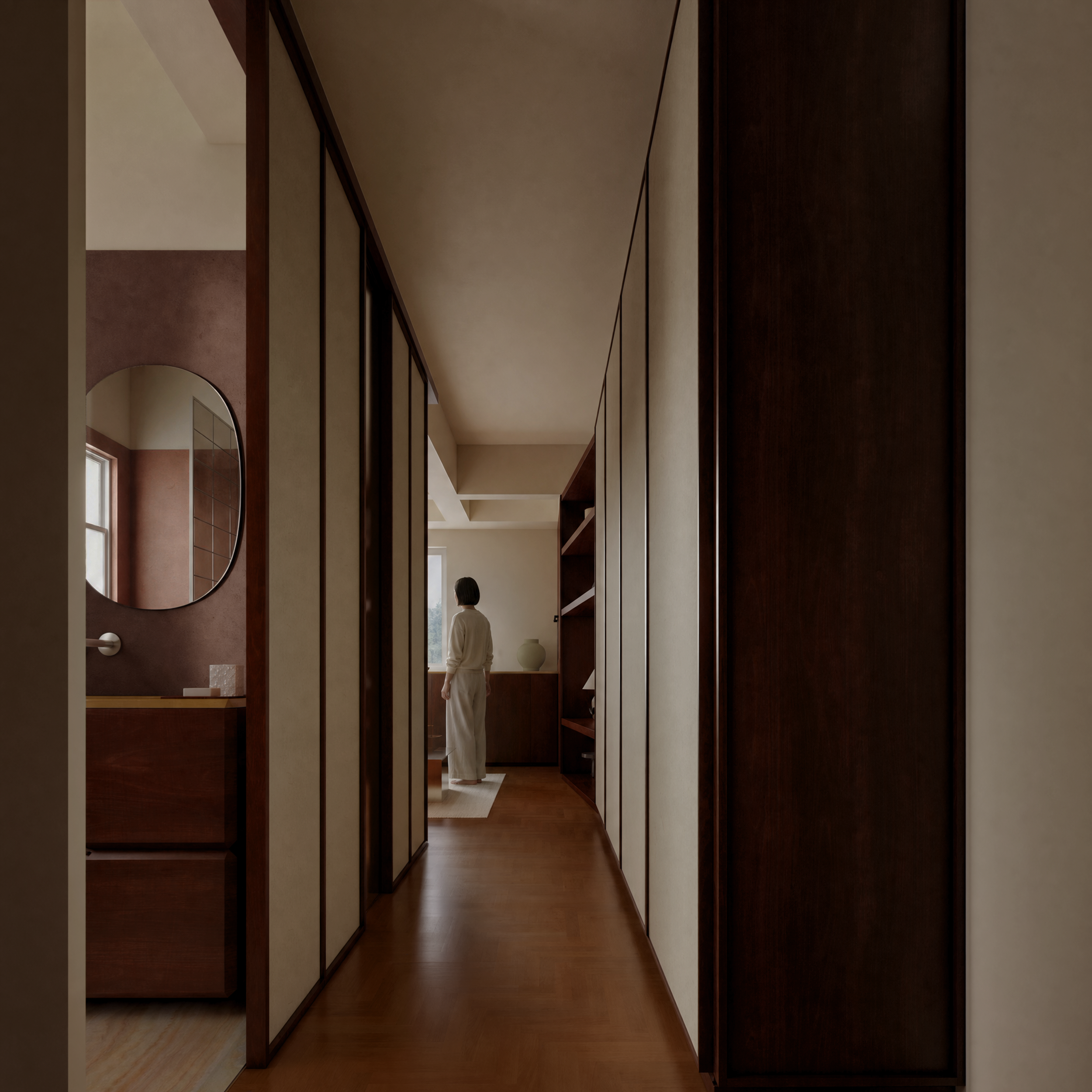
In a city defined by its relentless verticality and density, the luxury of personal space is measured in millimeters. This 48 sqm renovation challenges the typical Hong Kong "shoe-box" layout, rejecting the standard paradigm of isolated rooms in favor of a singular, holistic sanctuary. Drawing profound inspiration from the Japanese chashitsu (tea hut), the design philosophy shifts from "living in a flat" to "inhabiting a vessel."
Like a tea hut, this space is not about square footage, but about atmosphere. The tea hut is a place of deliberate removal from the outside world—a microcosm where every material, texture, and beam serves a meditative purpose. In this home, the city is visually blocked out to turn the gaze inward, creating a psychological retreat that fosters mindfulness amidst the chaos of the metropolis.
Project info
Residential - 48 Sqm.
Status
Design proposal
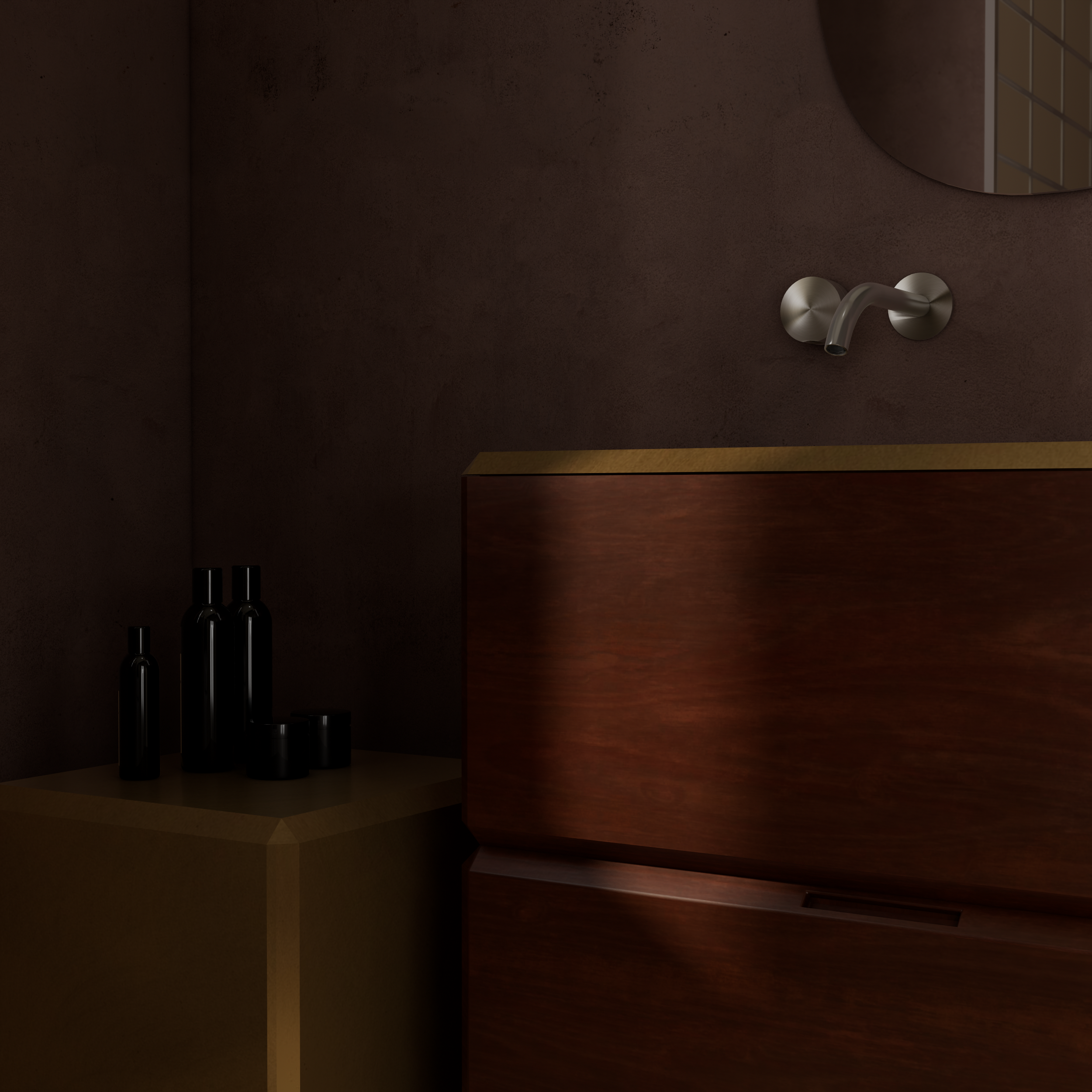
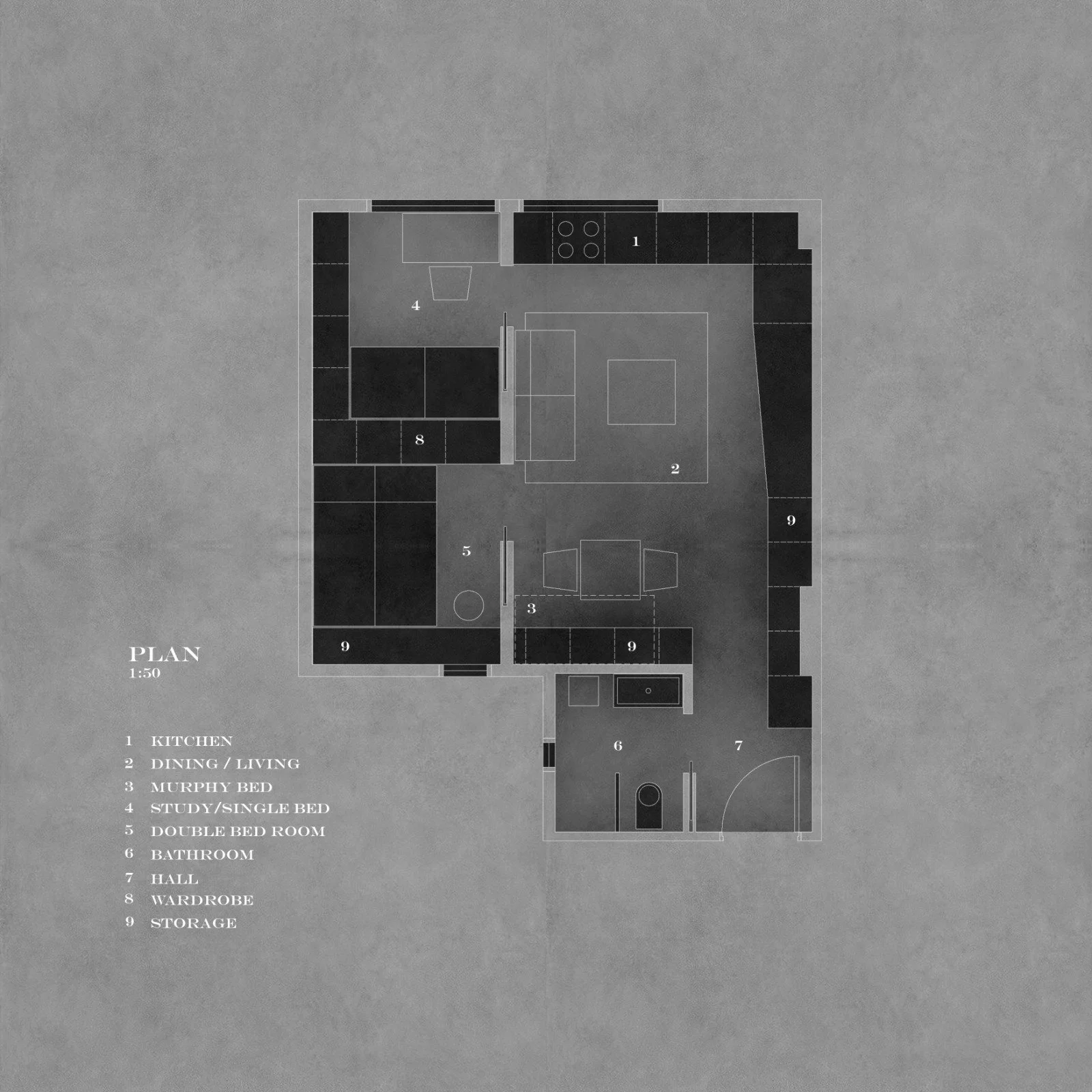
Material Palette: Wabi-Sabi in the Sky
The materials are chosen for their tactile warmth and ability to age gracefully, providing a sensory contrast to the cold glass and steel of the surrounding high-rises.
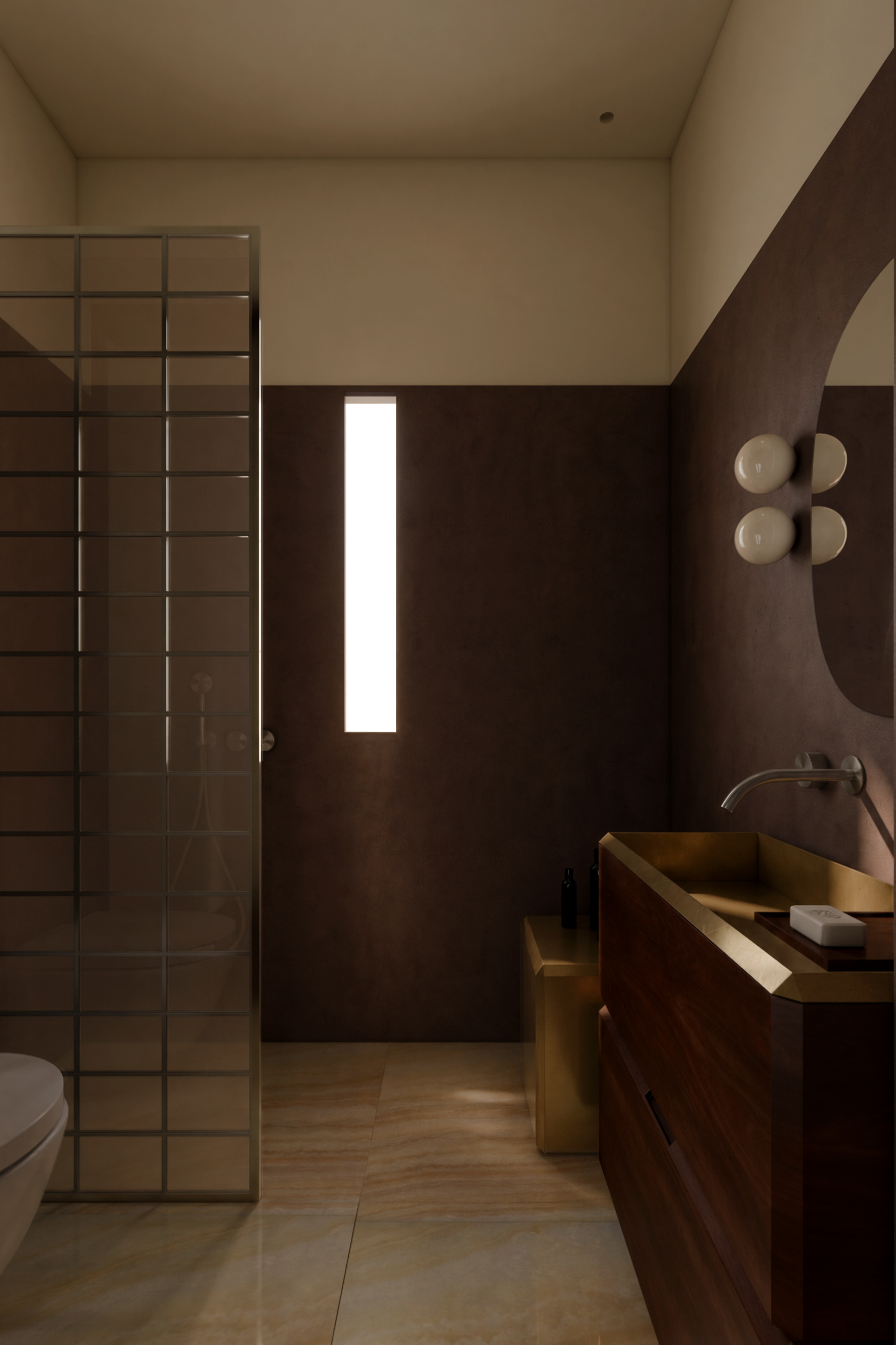
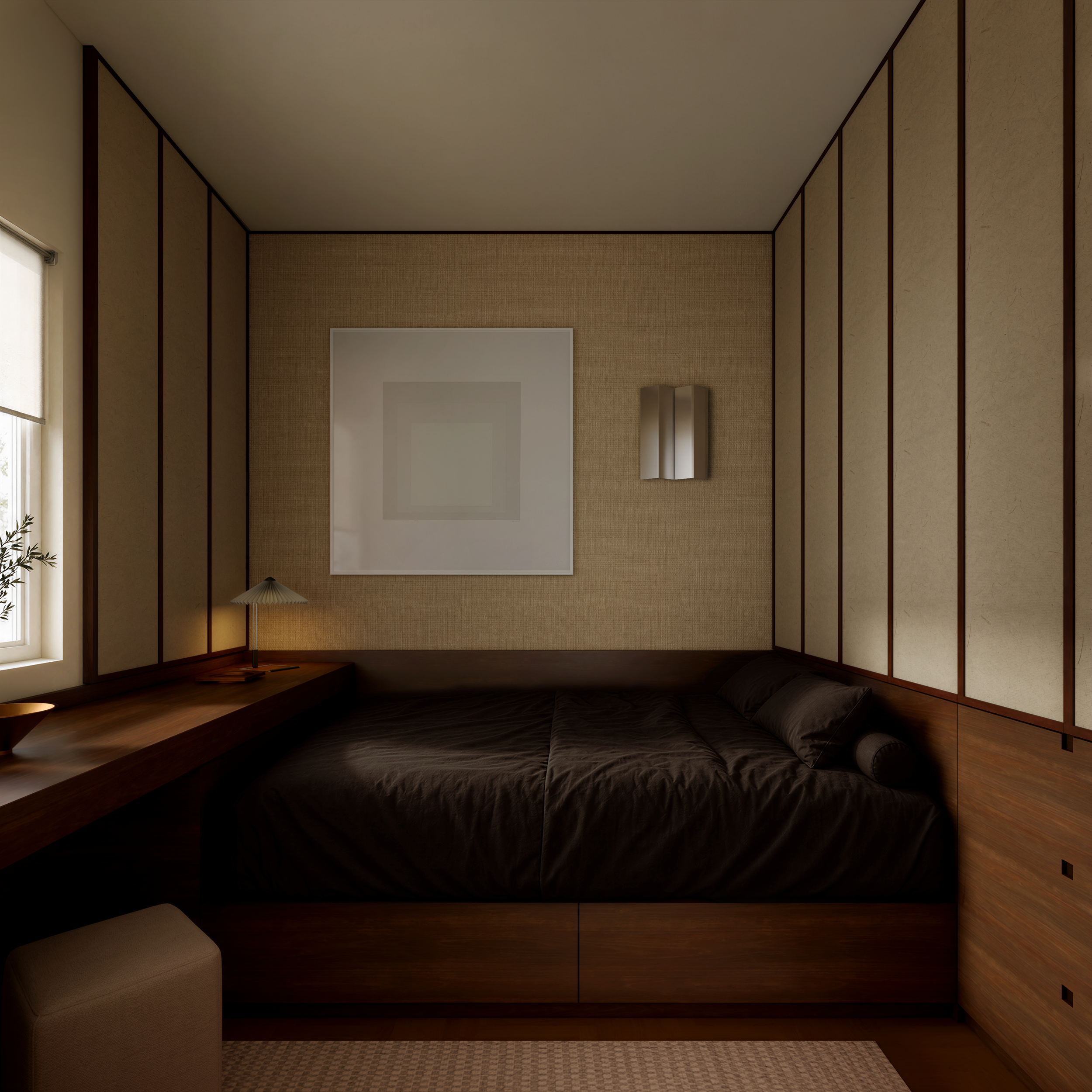
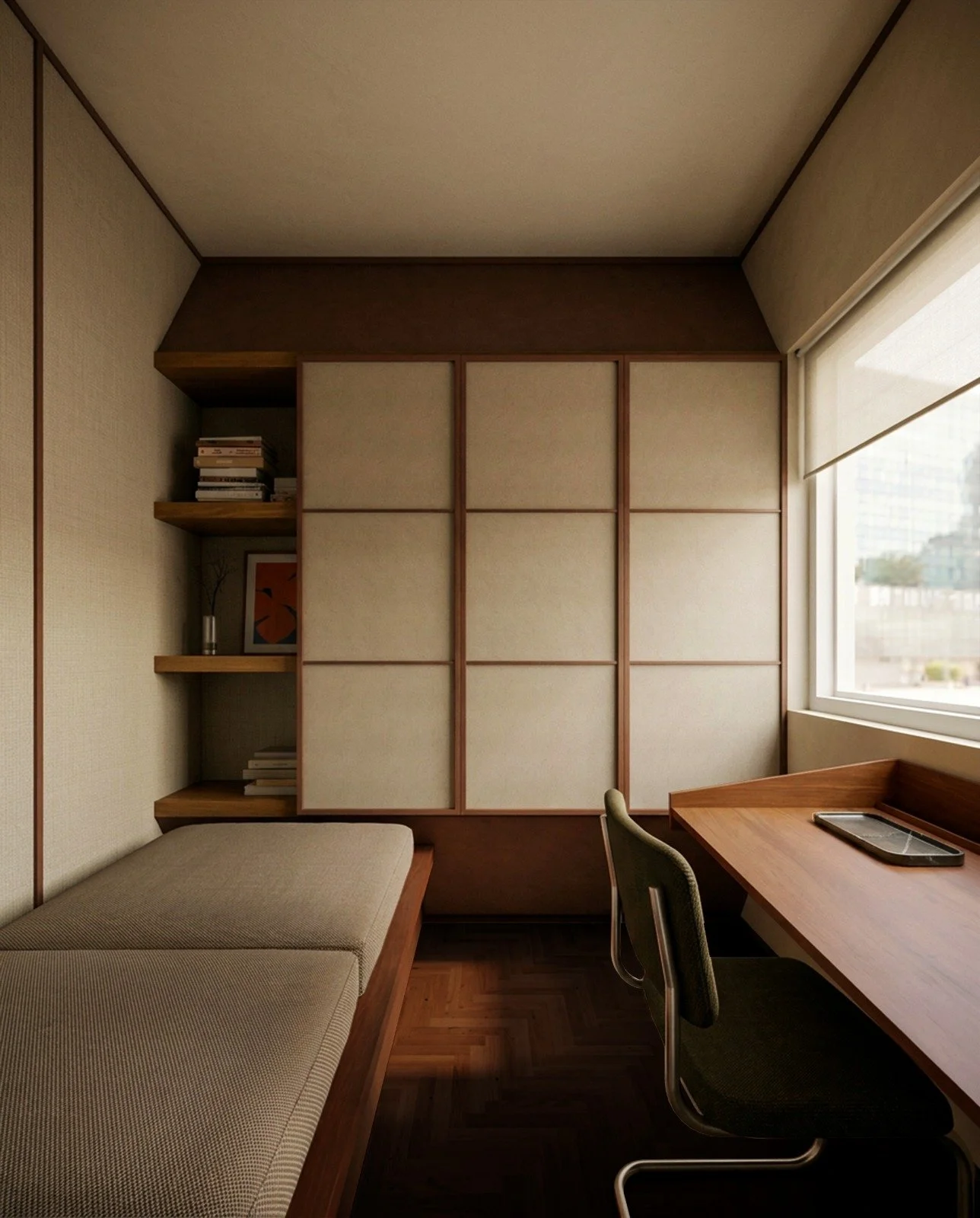
Walls are finished with a coarse, natural shikkui (plaster) or micro-cement in warm beiges, absorbing light rather than reflecting it harshly. Exposed structural joinery utilizes natural oak to bring the organic "forest" scent into the apartment. Accent lighting is deliberately subdued. We employ lighting fixtures with shoji-style paper diffusers to mimic the soft, ephemeral light filtering through rice paper, eliminating harsh shadows to promote relaxation.
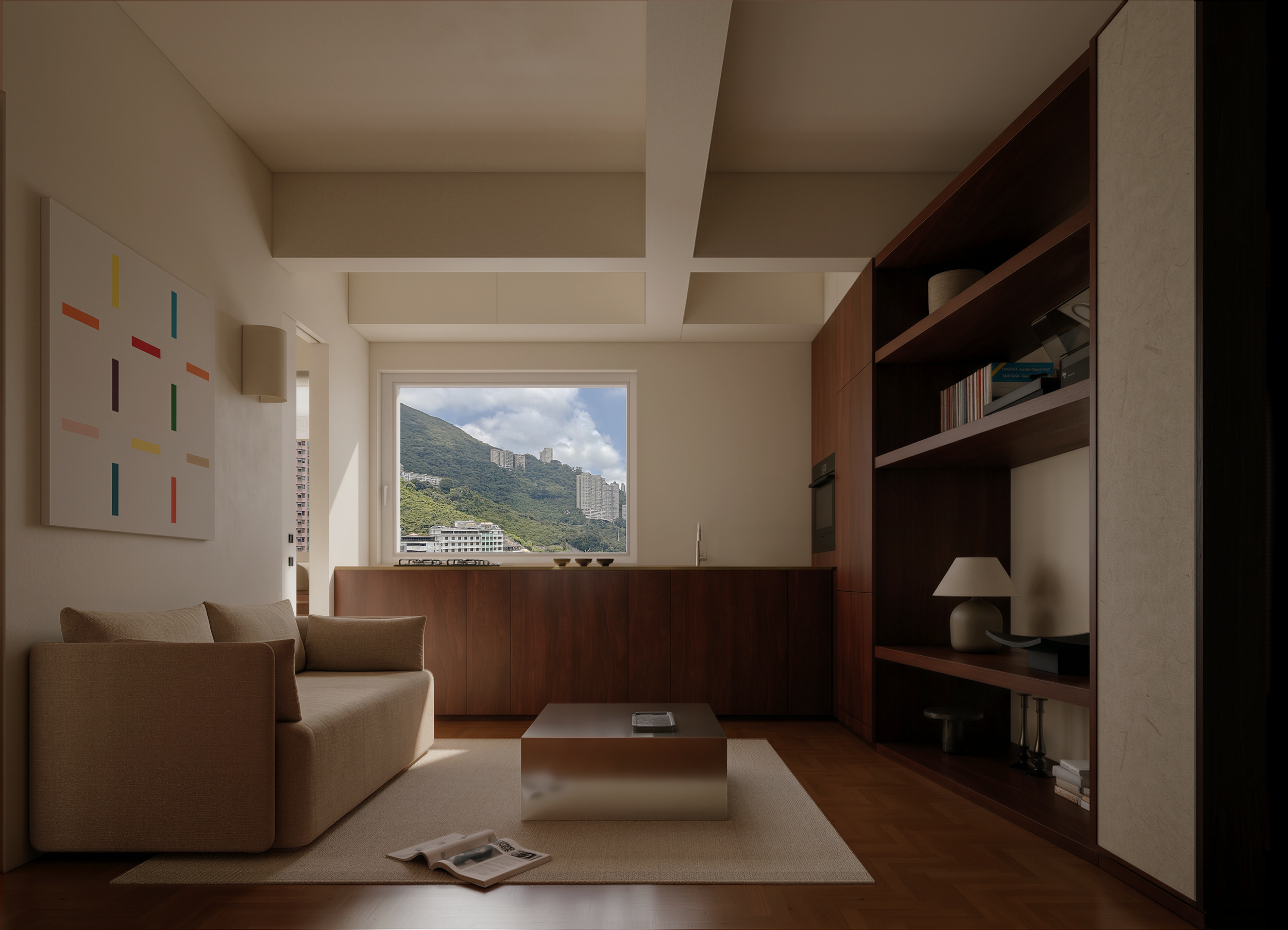
The "Oshiire" Revolution:
Inspired by traditional Japanese deep closets, we dedicate the perimeter walls to floor-to-ceiling sliding-door joinery finished in washi paper like panels and timber veneer. Behind these seamless doors lies a flexible grid system of adjustable shelving, hanging rods, and pull-out drawers. This envelopping "storage spine" absorbs bulky items—luggage, seasonal clothing, bedding, and cleaning appliances—rendering them invisible to the occupant's daily line of sight.